North Carolina Property Records
Exploring property records in North Carolina provides a detailed archive of property ownership, locations, and associated legal conditions. These public documents help you verify legal ownership, trace historical transfers, assess market value, and identify any encumbrances on the property.
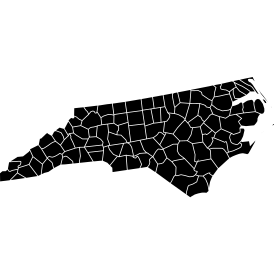
In North Carolina, each of the state’s 100 counties manages its own repository of property ownership records of about 5 million housing units through a local register of deeds office. These offices coordinate with county tax and planning departments to ensure that records are consistent, legally recognized, and current within their respective jurisdictions.
Property ownership information is tightly interwoven with other records maintained by governmental offices. These records are important for legal clarity and establish the basis for fair taxation, public planning, and zoning administration statewide.
Overview of Property Records
In North Carolina, real estate records provide a window into the state’s evolving land history. The first property deed ever recorded belonged to Nathaniel Batts and was dated September 24, 1660. The land is now called Pasquotank County.
Some counties’ archives date back to the late 1700s, which show early settlement, land grants, and the transition from Native-held lands to agricultural parcels. Rockingham County is one of these counties, and its real property documents span from 1789 to the present day.
Today, North Carolina uses a traditional deed-recording system maintained at the county level by the local register of deeds. Some statewide archives preserve older land and tax records for historical research.
Digitalization efforts have brought many counties online with searchable deed images, GIS parcel maps, and integrated tax-assessment data. The state also uses e-recording of property records. As of today, 96 counties have e-recording capabilities.
Recorded property instruments help in local taxation and revenue management. Relevant government offices assess properties based on recorded deeds, plats, and valuation data. These assessments form the foundation of local budgets, funding essential public services such as schools, infrastructure, and emergency response.
Beyond taxation, recorded files are vital tools for land use planning and sustainable development. Planners and developers analyze ownership boundaries, zoning classifications, and easements to guide community growth and infrastructure projects. Surveyors reference recorded plats and surveys to verify lot dimensions and compliance with zoning laws.
What Counts as Property Records in North Carolina
Property documents in North Carolina encompass a broad range of records that describe the ownership, condition, and legal standing of land and improvements. Below are the key record types you’ll encounter and what they reveal:
Deeds & Title Records
A deed supports the structure of every property transfer, serving as the official record that defines ownership and validates the transaction. You'll typically encounter general warranty deeds, quitclaim deeds, and special warranty deeds. Each deed offers varying forms of title protection and liability for both the buyer and the seller.
Ownership History & Transfers
Ownership history shows how property rights have evolved. North Carolina’s recording system uses a chronological chain of title. You’ll also encounter affidavits of ownership, estate transfers, and inheritance documents recorded when ownership changes due to probate or family settlement.
Mortgage & Loan Documents
Mortgage and loan documents include recorded deeds of trust, mortgages, loan disclosures, and lien releases. According to the Consumer Financial Protection Bureau data, there are over 450,000 mortgage records under the single-family (site-built) dwelling category. These filings confirm when a property’s mortgage has been fully satisfied and released from lien.
Property Tax Records & Assessments
Property taxes in North Carolina are administered locally by each county’s tax office. Tax records reflect assessed values, millage rates, exemptions, and payment history. Tax rates vary depending on the county. Carteret County uses the lowest rate, which is computed at $0.225 per $100 of assessed value.
Property Values & Market Data
In North Carolina, property values and market data are built from public sale prices, assessments, and aggregate valuation indices. Historically, the state saw strong appreciation during the early 2020s. According to the North Carolina Department of Commerce, annual home-price growth reached 6% (2024), lower than the 8% price growth in 2023.
Building Permits & Zoning Records
Building permits, land use approvals, and zoning classifications are important when you need to verify whether a property has undergone structural changes, additions, or use conversions. Zoning maps, meanwhile, indicate how land is categorized, such as residential, commercial, industrial, or agricultural.
Liens, Foreclosures & Judgments
Liens and judgments show financial or legal claims against property. In North Carolina, a foreclosure occurs when the borrower defaults on a deed of trust, prompting the trustee to sell the property at public auction. The foreclosure rate in the state is 1 in every 3,937 housing units.
Parcel Maps & Land Surveys
Parcel maps and land surveys are the visual and legal representations of property on boundaries, lot lines, easements, right-of-ways, and improvements. North Carolina has roughly 5.88 million parcels statewide. Nearly 100% of the state’s counties now provide digitized parcel polygon data via platforms like NC Parcels.
North Carolina Property Law
Property law in North Carolina forms the foundation for how land is owned, transferred, and regulated across the state. It defines the rights and responsibilities of property owners and ensures fairness in real estate transactions.
Key Statutory Framework
The North Carolina General Statutes establish the framework that keeps ownership transparent and enforceable. The foundational property law provisions include:
Chapter 39 Conveyances: Establishes the legal requirements for creating, interpreting, and recording deeds and other instruments that transfer property ownership.
Chapter 45 Mortgages and Deeds of Trust: Regulates how real estate is used as security for loans, including recording, satisfaction, and foreclosure procedures.
Chapter 160D Local Planning and Land Use Regulation: Sets the framework for zoning, permitting, and development control by cities and counties to guide local growth and land use.
Chapter 132 Public Records Law: Defines what constitutes a public record and provides guidelines for public inspection, access, and reproduction of government documents.
Deeds and Transfers
Property transfers are governed by the state’s deed conveyance laws under Chapter 39 – Conveyances. A valid deed must clearly identify the grantor and grantee, describe the property, and be properly signed, notarized, delivered, and accepted (§47-38).
A deed conveys fee simple ownership by default unless it states otherwise (§ 39-1). The register of deeds records each instrument, establishing constructive notice to the public.
Deeds may arise from sales, gifts, exchanges, inheritances, or court orders. Special provisions in § 39-13.3 validate conveyances between spouses, while the Uniform Voidable Transactions Act protects against fraudulent transfers to avoid debts.
Mortgages and Deeds of Trust
North Carolina primarily uses the deed of trust system instead of traditional mortgages. As described in Chapter 45, this three-party structure involves a borrower (trustor), a lender (beneficiary), and a trustee who holds legal title until the loan is repaid.
When you pay off your loan, a Satisfaction of Deed of Trust or Release of Lien must be filed to clear the encumbrance (§ 45-36.10). If it’s not properly released, the lien can remain on record, which can affect title transfers and refinancing.
In addition, you might encounter other types of liens, such as:
Materialmen’s or laborers’ liens (Chapter 44A) for unpaid construction work
Judgment liens, recorded under § 1-234
Tax liens are automatically attached to property for unpaid taxes
Before closing on any property, always check the register of deeds and clerk of court databases for outstanding liens or encumbrances.
Easements
An easement gives someone the legal right to use another person's property for a specific purpose, such as a shared driveway, access road, or utility line.
North Carolina acknowledges both express easements, which are established through written agreements, and implied easements, which may arise from long-standing use patterns or a demonstrated need for property access.
Easements must typically be recorded under § 47-27 to be enforceable against subsequent purchasers. You’ll often find them referenced within the property’s deed or as a separate recorded instrument.
Common types include:
Utility easements, such as power, water, or telecom access
Ingress or egress easements, including road access to landlocked parcels
Drainage or conservation easements to preserve environmental resources
Zoning and Land Use
Zoning authority in North Carolina stems from NC Gen. Statutes Chapter 160D, which consolidates the state’s planning and development laws. Each municipality and county adopts its own zoning ordinance to regulate how land may be used, whether residential, commercial, industrial, agricultural, or mixed-use.
To confirm land zoning classification and permitted uses, you can check:
Zoning maps and text on the local planning department’s website
Special use permits or variances granted by a zoning board
Comprehensive land-use plans that influence future development
When planning to build or remodel, you must obtain appropriate building and zoning permits. Unpermitted work can lead to code violations or affect property resale.
Zoning and land-use regulations aim to balance growth with public safety, environmental protection, and community character, and all zoning actions are subject to public record under § 160D-403.
Public Records
North Carolina’s Public Records Law allows the public to inspect and obtain copies of most government documents, including property records. Registers of deeds, tax assessors, and planning departments must provide reasonable access to these records during business hours or through online portals.
Certain records, such as Social Security Numbers or confidential personal data, are exempt from disclosure (§ 132-1.2). However, deed books, liens, and maps remain fully public.
The Role of Government Agencies
Several state and local agencies work together to manage, record, and safeguard North Carolina’s property information system.
The registers of deeds in each county serve as the primary custodians of real estate documents, handling the recording of deeds, deeds of trust, plats, liens, and releases to maintain reliable public records.
On the other hand, county tax assessors perform property revaluations, maintain tax rolls, and issue billing statements that determine local revenue. Planning and zoning departments administer land-use ordinances, approve building permits, and monitor compliance with development standards.
Clerks of Superior Court record judgments, probate files, and foreclosure orders that may affect ownership rights. The Department of the Secretary of State oversees business and corporate filings that often involve real property holdings.
Finally, the North Carolina Geographic Information Coordinating Council (GICC) establishes GIS standards and supports the integration of parcel and land-use data statewide for greater accessibility and verifiability.
How to Access Property Records
You can obtain North Carolina property records through several methods, depending on your preferred level of access and the county where the property is located:
Online: Most counties offer searchable databases through their official register of deeds websites, such as Wake County Register of Deeds or Mecklenburg County Register of Deeds. These online portals allow you to search by owner name, parcel number, or document type.
In Person: Visit your local register of deeds office or clerk of court to view or request certified copies of property records. Many offices also provide on-site access to public terminals for searching deeds, liens, and plats. One of these offices is the Davidson County Register of Deeds, which has a public computer lab and self-serve kiosks.
By Mail: Some counties allow you to request copies by submitting a form and payment; instructions are available on each county's register of deeds website. Requests typically require details such as the document type, book and page number, and the property owner's name. Processing times vary by county.
By Phone: County staff can confirm document availability and explain how to complete a records request; contact details are listed on your county’s official government page.
Limitations of Accessing Property Records
While North Carolina provides broad access to property information, certain factors may affect the availability, accessibility, or completeness of these records:
Privacy Restrictions: Sensitive personal information, such as Social Security Numbers and driver's license details, is redacted from public view.
Processing Delays: Newly filed documents may take time to appear online until they are indexed and verified by county staff.
Service Fees: Certified copies, mailed requests, and bulk data downloads may involve small administrative fees.
County Differences: Because each register of deeds operates independently, search tools, data formats, and online access levels vary by county.
Archived Records: Older or historical documents may only be accessible in person through deed books or microfilm archives.
How Property Records Are Updated
Real property files in North Carolina are continuously maintained to reflect the most current ownership, valuation, and legal status of real estate. Updates occur when certain transactions or official actions take place, each with its own processing timeline:
Property Sales or Transfers: Recorded immediately once a deed is filed with the county register of deeds.
Mortgages and Liens: Added or released within a few business days after the recording of related loan or satisfaction documents.
Building Permits: Updated regularly by local planning departments as permits are issued, inspected, or finalized.
Property Tax Assessments: Reviewed annually, with full countywide revaluations every four or eight years to reflect current market conditions.
Court Judgments and Foreclosures: Entered soon after final orders or sale confirmations are issued by the clerk of the superior court.
GIS Maps and Parcel Data: Adjusted periodically to include new surveys, annexations, or boundary changes.
The Importance of Property Records
Property records are essential tools that support transparency, protect ownership rights, and guide informed decision-making across many sectors. They serve different purposes depending on who uses them:
Homeowners: Verify ownership, track property history, and protect their legal rights.
Buyers and Investors: Assess market value, confirm titles, and identify potential risks before purchasing.
Lenders: Evaluate collateral and record mortgages or liens to secure financial interests.
Surveyors and Developers: Reference boundaries, easements, and zoning details for construction and planning projects.
Local Governments: Use property data for taxation, infrastructure planning, and community development.
Historians and Researchers: Analyze historical records to study settlement patterns and land-use evolution.
What Information Do North Carolina Property Records Contain?
Public property documents provide a detailed snapshot of a property's legal, financial, and physical characteristics. These records typically include:
Owner’s Name and Mailing Address: Lists the individual or entity currently holding title to the property, along with their official mailing address for tax notices and correspondence.
Legal Description and Parcel ID: Includes the property’s boundaries, subdivision details, and official parcel identification number (PIN).
Recording Dates and Book/Page References: Show the exact date a document was recorded in the county register of deeds, along with its book and page number.
Deed Type and Consideration Amount: Identifies the nature of the transfer, such as a sale, gift, or inheritance, and the monetary value or consideration exchanged during the transaction.
Assessed Land and Building Values: Reflect the estimated taxable worth of both the land and any structures on it.
Liens, Encumbrances, and Easements: Provide details on outstanding financial claims, utility rights-of-way, or access agreements that may limit the property’s use or affect its marketability.
Historical Transfers and Related Documents: Record prior ownership, subdivisions, or legal modifications, helping to trace the property’s full chain of title and uncover potential discrepancies or restrictions.
Resolving Property Disputes
Property disputes often arise over unclear boundaries, overlapping easements, or conflicting ownership claims. However, enforceable transfers and verifiable records often become the deciding factors.
Title searches and surveys help uncover inconsistencies in legal descriptions, while quiet title actions are filed to establish clear ownership. Boundary conflicts are typically settled through recorded plats and professional surveys that trace property lines with precision.
Before taking matters to court, parties are encouraged to pursue mediation or arbitration to save both time and cost.
However, when disputes escalate, North Carolina’s Superior Courts hold jurisdiction over real property cases involving title or possession. In every scenario, well-documented and up-to-date records provide the clarity needed to reach fair and lasting resolutions.
FAQs
You are not required to register a will while living, but after death, it must be filed with the clerk of the superior court in the decedent's county for probate under Chapter 31. Only then does it become an official public record.
Your recorded deed from the register of deeds is primary proof. Property tax bills, mortgage documents, or title insurance policies can verify ownership, but only a recorded deed provides legal evidence recognized under state law.
A general warranty deed offers the highest level of protection to the buyer. The seller guarantees a clear title against all past and future claims, which grants full ownership rights and defense against defects in prior transfers.
A quitclaim deed carries the greatest risk. It transfers only whatever interest the grantor has, if any, without any warranties or guarantees about title quality or ownership. Quitclaim deeds are most often used between family members, to clear title defects, or in non-sale transfers where trust already exists between the parties.
Placing property in a revocable living trust can simplify transfer, avoid probate, and maintain privacy. Inheriting directly may trigger probate, but it avoids trust setup costs. The better option depends on your estate planning goals.
Keep your original, signed deed in a fireproof safe or safety deposit box, and rely on the recorded copy at the county register of deeds for legal proof. Never store it in unsafe or easily damaged places.
You’re not legally required to hire a lawyer, but it’s highly recommended. A real estate attorney or title company can check for liens, easements, or title defects before closing, reducing legal and financial risk.
There's no single statewide copy fee, but the state gives counties the authority to establish consistent local fees. Most counties, such as Mecklenburg and Rockingham, align closely, typically charging $0.25 per page for plain non-certified copies and $5 for certified copies for in-person requests. Online viewing is usually free, but certified copies require payment.
No, many counties offer free online search and viewing tools. However, downloading high-resolution files or requesting certified paper copies from the register of deeds may include small service or printing fees.